
Vision
To build an inclusive societywhere every individual,regardless of ability orbackground, has equal access tohealthcare, dignity, andopportunities for a better qualityof life.
Human Rights Protection Mission (HRPM) is a registered national non-governmental organization committed to driving impactful social change through strategic health and human welfare initiatives. With a focus on marginalized and underserved communities, HRPM implements large-scale programs addressing critical issues such as disability support, healthcare access, cancer protection, and social justice. The organization works in collaboration with healthcare professionals, government bodies, and corporate partners to deliver sustainable and measurable outcomes. HRPM's programs are driven by data, community engagement, and transparency, ensuring maximum reach and long-term empowerment.
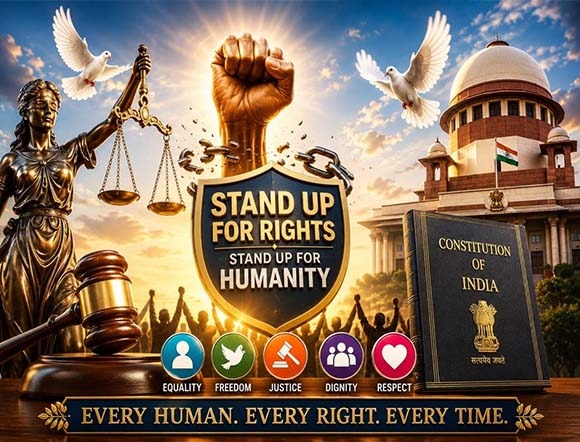
HRPM works from a simple belief: every person deserves dignity, safety, awareness and access to justice.
To build an inclusive societywhere every individual,regardless of ability orbackground, has equal access tohealthcare, dignity, andopportunities for a better qualityof life.

To implement impactful health,disability, and welfare programsthrough collaboration, innovation,and community empowerment,ensuring sustainable change formarginalized and vulnerablepopulations across India.

We are guided by integrity,compassion, inclusivity,accountability, and acommitment to social justice,ensuring that our initiatives areethical, transparent, and centeredaround community needs.
Training and Capacity Building: Facilitate training for local volunteers, caregivers, and teachers on handling speech and hearing aids, basic rehabilitation practices, and inclusive behavior.
Distribute essential assistive devices like wheelchairs, crutches, walkers, and tricycles to persons with physical disabilities, enabling improved mobility and independence.
Promote inclusion through recreational, cultural, and skill-building activities tailored for children and adults with disabilities to enhance confidence and social participation.
Provide follow-up services, maintenance assistance, and device repair for hearing aids and mobility tools to ensure long-term usability and impact.
Targeting children aged 0-14 years who suffer from hearing impairments due to birth defects, infections, or early childhood conditions.
Providing services to families that cannot afford audiological or rehabilitation care, including urban slums and rural households.
Engaging primary health centers, anganwadis, and rural health workers to identify and support eligible individuals in need of care.
Serving underserved tribal and geographically isolated communities where access to specialized medical and rehabilitation support is scarce.
| Category | Description | % of Total Funds |
|---|---|---|
| Infrastructure Development | Setting up 3 rehabilitation hubs and 5 satellite centers. | 30% |
| Medical & Rehabilitation Equipment | Audiology tools, physiotherapy kits, mobility aids, and assistive devices. | 20% |
| Staff Recruitment & Training | Hiring and upskilling therapists, audiologists, and field workers. | 15% |
| Community Outreach & Awareness Campaigns | Camps, screenings, materials, and sensitization drives in target regions. | 10% |
| Mobile Unit Deployment | Hearing screening vans with diagnostic and mobility support tools. | 10% |
| Technology & Digital Systems | Tele-rehab setup, digital record systems, and tracking software. | 7% |
| Monitoring, Evaluation & Impact Assessment | Outcome tracking, third-party assessments, and reporting. | 5% |
| Administrative & Miscellaneous Costs | Office expenses, transport, utilities, and contingency. | 3% |